Recalculating: How the Reconquista Made me Reconsider Everything
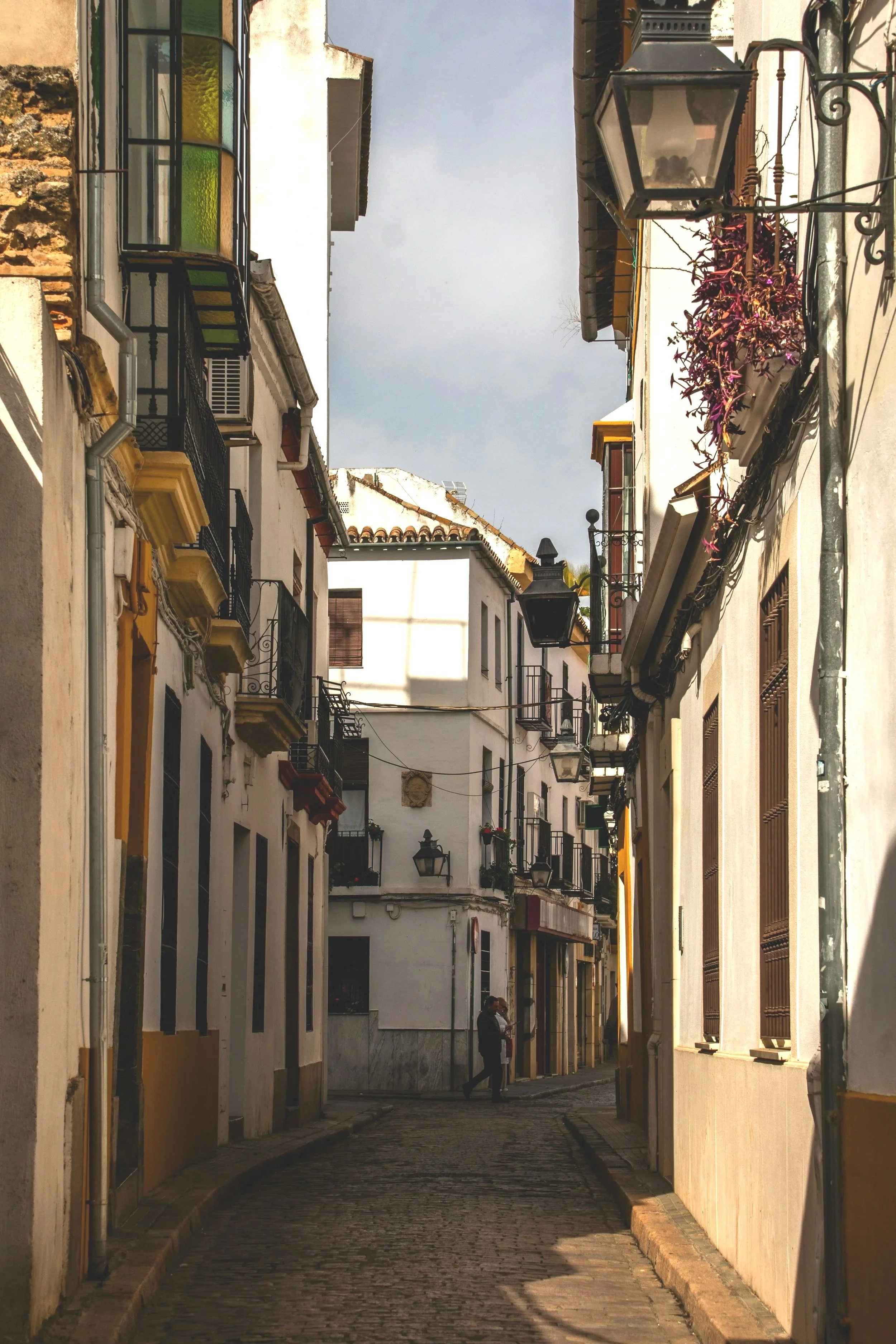
After spending a couple weeks in Spain at the start of the year, I was reminded how different life can be–and upon my return, how easy it is to jump right back into a routine without ever questioning the “why.” For that reason, I’ve spent a lot of time reflecting, and while I still don’t have all the answers, perhaps I can share some of the questions instead.
When I was in Spain I received a crash course on the Reconquista and Spanish Inquisition. And as someone who recently spent several months learning about the Catholic Church by participating in adult catechism (I’ve always loved studying comparative religion), it truly pained me to see the devastating impact the Reconquista and the Inquisition had on cultural and faith communities throughout the Iberian Peninsula.
What bothers me most is that the Inquisition wasn’t really about religion–it was about consolidating political power in the name of religion. The tribunals of the Inquisition were controlled by the Spanish monarchy, not the pope. And, sadly, institutions meant to uphold faith became instruments of punitive political authority.
That experience reminded me of a summer when I was in graduate school studying International Relations at UC San Diego.
As a graduate student aspiring to a career in diplomacy, I interned for the U.S. Department of State’s Office of International Religious Freedom. My job was to comb through international news reports and internal State Department cables documenting instances of religious persecution around the world.
Every. Single. One. Irrespective of country or religion.
Christian. Muslim. Jewish. Hindu. Buddhist. Minority sects I had to Google because I had never heard of them.
As a naïve twenty-something who had grown up in a fairly insulated suburban bubble, I didn’t initially understand what this work had to do with diplomacy. Why was the U.S. Department of State cataloguing infringements upon the rights of religious minorities halfway around the world?
But by the end of the summer, with the help of my wise State Department colleagues, I came to understand this singular truth: protecting the religious freedoms of others meant protecting religious freedom for all.
And that truth extends far beyond religion to:
Freedom of speech
Due process
National sovereignty
And the rule of law.
These are not protections we preserve only for ourselves or for people we agree with. They are principles we defend universally, lest we risk losing them entirely.
So yes, Spain gave me a lot to think about. It made me question myself. It made me thoughtfully reconsider—not my faith—but my religion. It also forced me to reflect upon my country and the state of our world.
Because while the world has changed considerably over the past 500 years, some things remain startlingly the same, especially when it comes to political power and the mechanisms used to achieve it. I am wary of political power masquerading as moral right—in any century.
And as I reflect on the world today, the lesson I learned as a State Department intern echoes repeatedly in my mind. Because the real issue isn’t a few bad actors or seemingly isolated incidents. The real concern is the integrity of a global system, an international community that upholds standards designed to prevent a “might makes right” world.
I certainly don’t have all the answers. But I think it’s important that we keep asking questions and we do so freely and publicly, within a system that provides lawful and peaceful ways to do so. Because when we allow those basic principles of democratic governance to erode—even for reasons that seem justified in the moment—we risk weakening the very system that sustains a peaceful world order.
So, yes, I’ve been a little quiet lately as I work through all of this.
But I want to offer you one small challenge before I go.
We’ve all been so focused on the future lately (myself included) that perhaps we’ve forgotten to look to the lessons of the past. Traveling through Andalusia, and spending time in the cities of Cordoba, Seville, and Granada, brought history into hyper definition for me.
The challenge is this:study a little history this week. Watch a historical documentary. Read some historical nonfiction. And learn from it, so we don’t repeat mistakes of the past in the present or the future.
And, finally, remember the lesson I learned during my time at the State Department:
When we protect the rights of others, we protect the rights of everyone—including ourselves.