The Power of the Pause: The City that Taught Me to Slow Down
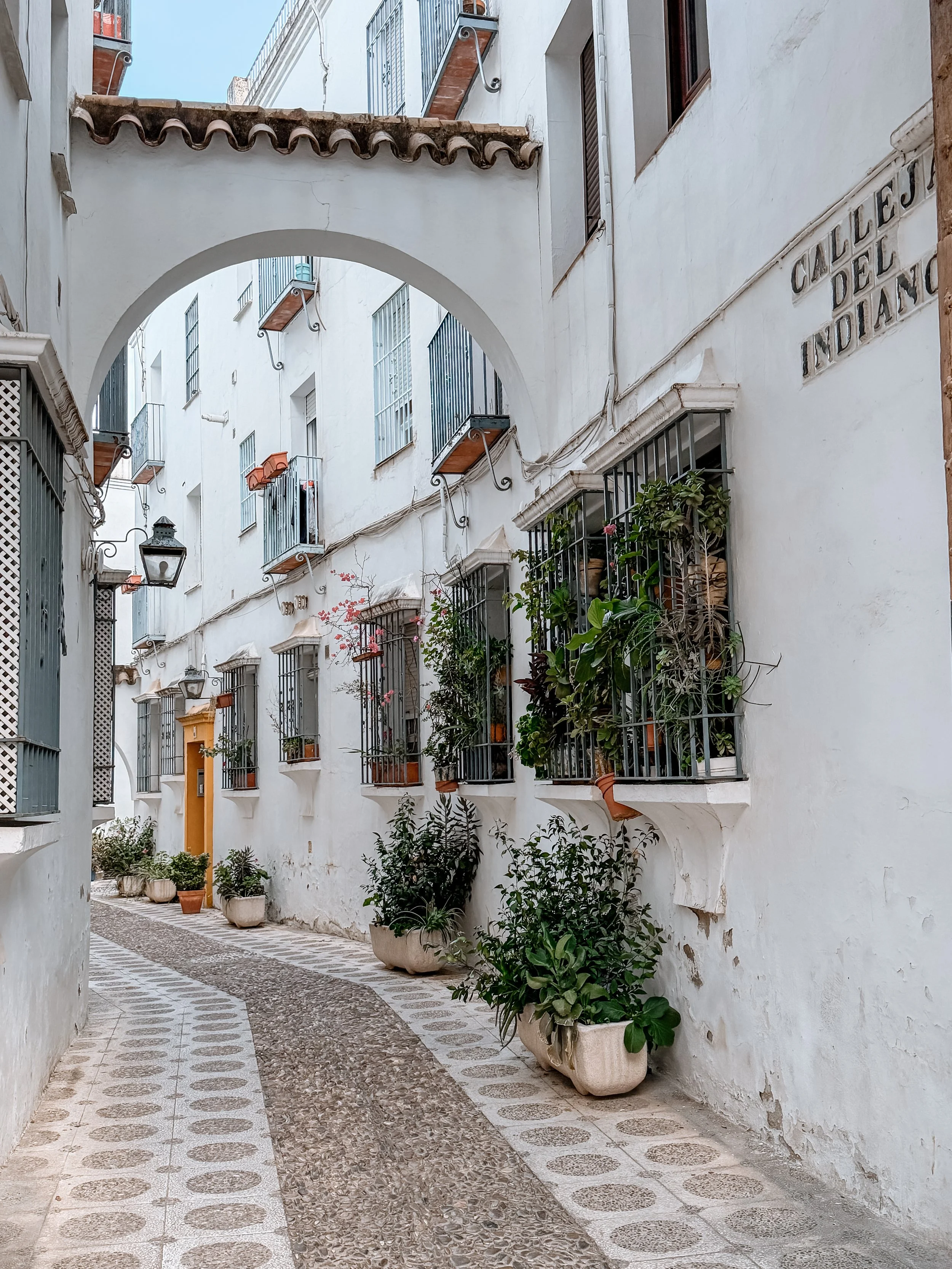
The cobbled streets of Cordoba. The streets are narrow intentionally to keep walkways shaded during the extreme heat of summer.
I first learned about transitions as a young pianist.
There are many ways to move from one section of music to another: you can modulate from one key to the next, you can bridge a verse and a chorus. But the transition that mortified me the most was the dramatic pause (known as a “rest”) between two sections of music.
A rest could last one beat or several, and it signals to the listener that one movement is coming to an end and another is about to begin.
While this pause is usually brief, no more than a moment or two, mere seconds stretch exponentially when you can feel your heart thumping through your chest and hear every audience member’s breath.
Sitting still, especially in moments of pressure or uncertainty, can feel terrifying. It’s almost always easier to keep moving, speaking, working, and doing than to be alone with our thoughts.
Any transition, whether personal or professional, is challenging. As someone who has spent much of my professional life leading people and organizations through transitions, I know that change is hard for everyone. Very few people have mastered the art of transitioning with grace.
I’m still working on it myself, and a recent visit to Spain offered an unexpected, but much needed, lesson in this area.
Last week I returned to Spain, and the beautiful thing about the town I’m in is it forces you to slow down.
The streets are narrow and tangled. If the fastest way from Point A to Point B is a straight line, in Cordoba you’re out of luck.
Pedestrians, cars, and horse-drawn carriages share the same cobbled roads – no stoplights needed here. All simply make space for each other, which means none travel at top speeds.
Modern structures stand unapologetically next to ancient ruins – neither more privileged than the other; both forcing a double-take. (Is that a parking garage nestled inside a medieval wall? Why, yes, it is.)
At every turn, a small but friendly square invites you to sit for a spell. And around every corner some architectural wonder draws your eyes heavenward.
To rush through a place like Cordoba would be a crime (though you couldn’t, even if you tried—the cobblestones humble even the most nimble).
In this place there are no world-class museums (like the Prado or Louvre), Rodeo-esque high streets, or even many 5-star hotels. They are unnecessary here, because the whole city is a treasure all its own.
While I wish I had the words to describe this ancient and artful town, all I really know is how it feels. It’s the kind of place that makes you WANT to pause.
When I first arrived, I used my phone to navigate everywhere I went—but now I just wander. Ironically, I am never lost. This city taught me that even bumpy, winding paths can still lead you where you need to go, and more often than not, the joy is in the unexpected discoveries along the way.
Cordoba taught me to move slowly so I can marvel at the wonders that abound, and this is a lesson I hope to take with me wherever I go.