Singing Badly
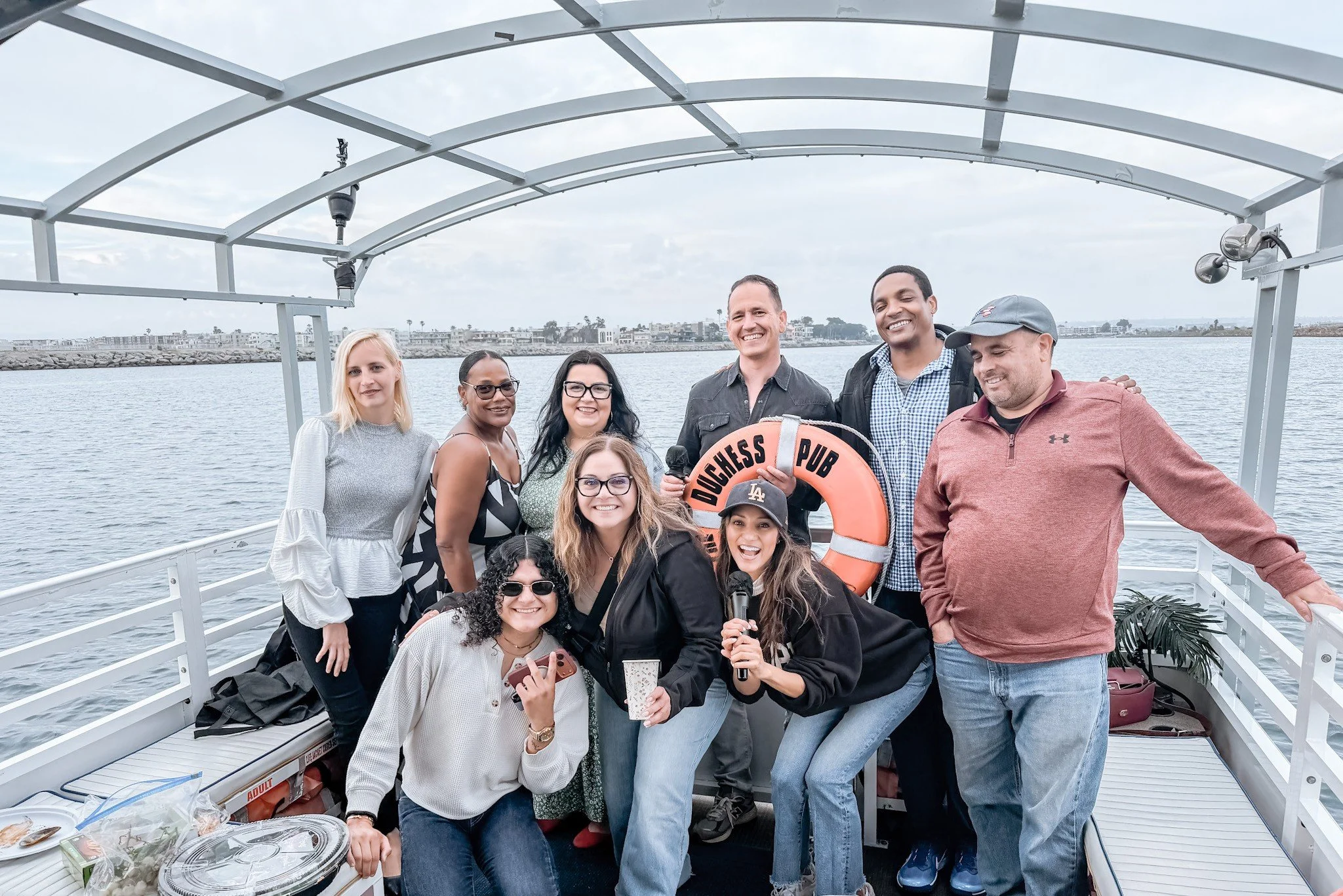
Last week, a group of about 10 colleagues set out from Marina del Rey on a paddleboat equipped with bicycle seats, matching pedals, and two microphones for a Karaoke Paddle Pub team building event.
For two hours we sang (badly), danced, ate, drank, and paddled our way around the marina.
From “Livin’ on a Prayer” to “Girls Just Wanna Have Fun,” while belting ballads we learned things we didn’t know about our fellow workmates—like who loved to croon, who missed their calling as a wedding DJ, and who found a fellow bluegrass fan.
In my last letter, I mentioned the org. transformation work I’ve been doing with an LA-based property management team. The trouble with transformation (of any kind) is it often causes stress on both the organization and the people within it.
During those times, it's nice to take a break from the daily grind to focus on individuals and the bonds between them.
Workin’ 9 to 5: Why Employee Engagement Matters
There are many models and methods of employee engagement. But before we dive into organizational theory, let’s look at the reasons it matters. Effective engagement can:
Boost productivity and performance
Decrease attrition and absenteeism
Contribute to a positive work environment
For leaders and managers, fostering engagement can mean less time and money spent on staff turnover and hiring, which is a major pain point for many organizations.
Organizational psychologist William Kahn, considered the “father” of employee engagement, offers three dimensions that contribute to engagement at work:
1) meaningfulness
2) psychological safety
3) physical, mental, and emotional availability
I’ve read Kahn’s seminal paper, Psychological Conditions of Personal Engagement and Disengagement at Work (so you don’t have to), and what it boils down to is creating a culture where employees feel empowered to bring their authentic selves to work. According to Kahn, people use varying degrees of themselves (physically, cognitively, and emotionally) in the roles they perform.
In his words, “The more people draw on their selves to perform their roles…the more stirring are their performances and the more content they are” in the roles they embody.
What’s Change Got To Do With It?
For the past decade, I’ve led and contributed to employee engagement initiatives across organizations. And as a Change Management leader, I recognize the strain change can have on individuals at all levels of an organization. For that reason, I intentionally imbed points of connection to help create meaning in what can often feel like rough waters when navigating change.
Going back to Kahn’s three dimensions of engagement, as you think about your organization and its culture, I challenge you to consider ways to create 1) meaningfulness, 2) psychological safety, and to 3) minimize distractions preventing individuals from being fully present.
Doing these three things creates an environment in which employees can truly immerse their full selves in their work.
That said, bringing your full self to the workplace can be intimidating. We all sing off-key now and then, but facilitating meaningful relationships with coworkers helps create the trust required to take risks and ultimately perform at the highest levels.
Next Steps
If you, are someone you know, needs help boosting their organizational culture or building an employee engagement program, I’d love to help. Schedule a complimentary call with me today, and let’s keep hitting those high notes together.